EmpowerEd 2026
Multimodal Authentic Assessments in the Age of AI
Coordinated pro bono by Benny Pan | Founder, InspiraEd | Lead at the AI Collective
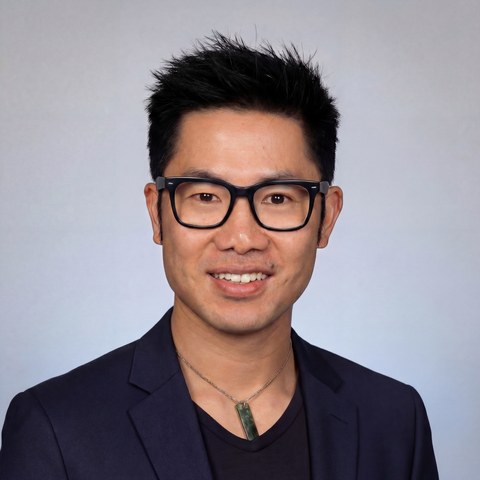 Benny Pan
Coordinator · Founder, InspiraEd
 Jeff Plourd
Co-founder, Snorkl · Week 1 guest
 Jon Laven
Co-founder, Snorkl · Week 1 guest
 ASEF
ASEFAsia-Europe Foundation · host
 InspiraEd
inspira-ed.com
 Snorkl
snorkl.app
The programme
Each teacher builds one question in Week 2 and improves it every week after. Nobody starts fresh. The sessions run live for the registered cohort, and this page is updated after each one.
What each Friday is about
-
Week 1Guest conversation
Rethinking Assessment in the Age of AI
A podcast-style conversation with Jeff Plourd and Jon Laven, the two former teachers who founded Snorkl. They met as first-year teachers in Las Vegas in 2012. For about a year their tool had no AI in it at all: students recorded their thinking and gave each other feedback. Then ChatGPT arrived in November 2022 while they were holding a pile of student recordings nobody had time to watch.
Benny asks them why a recording of a student thinking is harder to fake than a finished product, where a student's voice recording actually goes and which country holds it, and what a teacher in this room does on Monday morning. The founders then demo the tool and take questions from the room.
How it wentFrom the session -
Week 2
Designing Authentic Tasks that Resist AI Shortcuts
Teachers take one question from their own subject and rewrite it so it asks students to explain their reasoning. Then they build it in Snorkl from a blank screen and choose how students will answer: typing, drawing, talking, or talking while drawing. Talking while drawing is the hardest for a student to fake with AI, so that is the option the programme asks teachers to try first.
By the end of the session every teacher has one question built from scratch, in their own language, and the cohort keeps improving it over the next three weeks. In trios, teachers answer each other's questions, so by Week 3 every question has real responses on it.
How it went -
Week 3
Capturing Thinking: Multimodal Evidence with Snorkl
Snorkl will draft its own marking criteria from any question. Accepting that first draft is the beginner mistake. If the guidance is vague, the tool only checks whether the answer was right. If it is specific, the tool can comment on how the student reasoned. This week teachers add example answers and marking points to their Week 2 question, then read what the tool said about the real responses their colleagues left.
Teachers ask first whether they can trust the tool's comments. In this programme a teacher reads and edits every comment before a student sees it, and this week each teacher edits at least one.
How it went -
Week 4
Rubrics, Feedback and Integrity for Multimodal Work
Instead of reading thirty answers one at a time, teachers read the pattern. The centrepiece is a live class summary of the cohort's own question, built from around thirty real answers left by the people in the room over the previous two weeks.
From what they actually see, each teacher writes a marking guide of three or four lines, and one sentence on what they do when a student uses AI on the task. The position on honesty has to work without detection software, because detection gives false positives and punishes the wrong students.
How it went -
Week 5
Prototype, Peer Review and Share
In Week 5 there is no teaching. Every teacher presents their finished task in three minutes, in small rooms of five, and each room picks one task to show the whole group.
The shared collection is then handed over to the cohort, sorted by subject, so a teacher in Jakarta can adapt a task built in Warsaw. Teachers can also pair with someone in another country and trial each other's task next term.
How it went
The product is no longer the evidence
He waka eke noa is a Māori proverb. We rise, fall, work and learn together, in the same boat. This principle underpins the collaborative and co-creating nature of this programme.
A student can now produce an essay, a speech or a lab write-up in seconds. The finished piece no longer tells us what they learned, and a detection tool cannot tell us either. It gives false positives, it punishes the wrong students, and sometimes it destroys trust.
So this programme moves the evidence somewhere more authentic and harder to fake: students thinking out loud. By voice, on a whiteboard, while they work. Teachers design the tasks and capture the thinking with Snorkl. The rubrics come from their own expertise. We judge learning with integrity instead of policing it. And we keep the students most at risk of being left behind in view the whole way through.
What teachers will be able to do
- Design assessments that show real thinking rather than an AI-polished product.
- Build a portfolio-based assessment and trial Snorkl tasks that capture how students think.
- Write rubrics that stay fair for every learner.
Who it is for. Secondary and vocational teachers and school leaders, any subject, from Asia, Europe and beyond. No technical background needed.
Snorkl, built by two former teachers
A teacher sets a question. A student answers by talking out loud while drawing on screen, or just talking, just drawing, or just typing. The tool listens and immediately says what was good and what to rethink. The student can try again, and the teacher sees a summary of what the whole class said. It works in more than 40 languages, which matters for a cohort that often teaches in a language that is not their students' first.
Where this programme came from
EmpowerEd 2026 is Benny's second programme with the Asia-Europe Foundation. The first, Empowering Educators with AI and Google Tools, ran from 17 August to 7 September 2025 and trained 38 educators across 18 countries in Asia and Europe. It ran as five modules: AI foundations, AI in education, practical integration, ethics and responsibility, and implementation planning.
In 2025 Benny also spoke on AI in education at the ASEF conference in China. The question behind all of it is the one he keeps asking: not "did a student use AI?" but "did a student learn something?"
ASEF describes EmpowerEd as teacher-led. The people who design and run each programme are teachers, and ASEF wants participants to leave as "designers, researchers and changemakers". So most of each 90 minutes here is teachers building something and answering each other's questions.
Scroll sideways for more. Tap a photo to open it.
Who is running the five weeks

Benny is a science educator and AI advisor in New Zealand, working on the ethical, practical use of AI and delivering safe AI governance to schools and organisations. He taught Physics and Chemistry at Rototuna Senior High School in Hamilton, where he was the first teacher to bring AI literacy and multimodal assessment into the classroom.
In 2026 he completed a Master of Technological Futures at academyEX, researching multimodal AI and critical thinking in secondary science. That is the question at the heart of this programme. Through ASEF EmpowerEd he has helped train 38 educators across 18 countries, and he has run AI workshops for teachers and school leaders in five cities across New Zealand.
He began his career as a clinical trials pharmacist, which is where his evidence-first habit comes from: change one thing, control the rest. He is particularly concerned about the students who may be left behind by the rapid rollout of AI in education.
Email Benny at benny@inspira-ed.com or bennypan@rhs.school.nz. Questions about the programme itself go to the Asia-Europe Foundation: info@asef.org.
Two ways to follow this work
Benny shares what the room builds, week by week, on LinkedIn. And if you lead a school, a teacher network or a programme of your own and want to talk about running something like this, book a conversation. No pitch, no deck.
Hosted and supported by